
A Spark Hire Alternative for Teams That Want More Structure After the Interview
If your team already likes asynchronous interviews, the next question is usually what happens after candidates finish them. That is where many Spark Hire alternative searches begin.
Kira keeps the async interview experience but pushes harder on the screening layer after submission: structured summaries, clearer prioritization, and a review workflow that helps recruiters move from interview completion to shortlist faster.
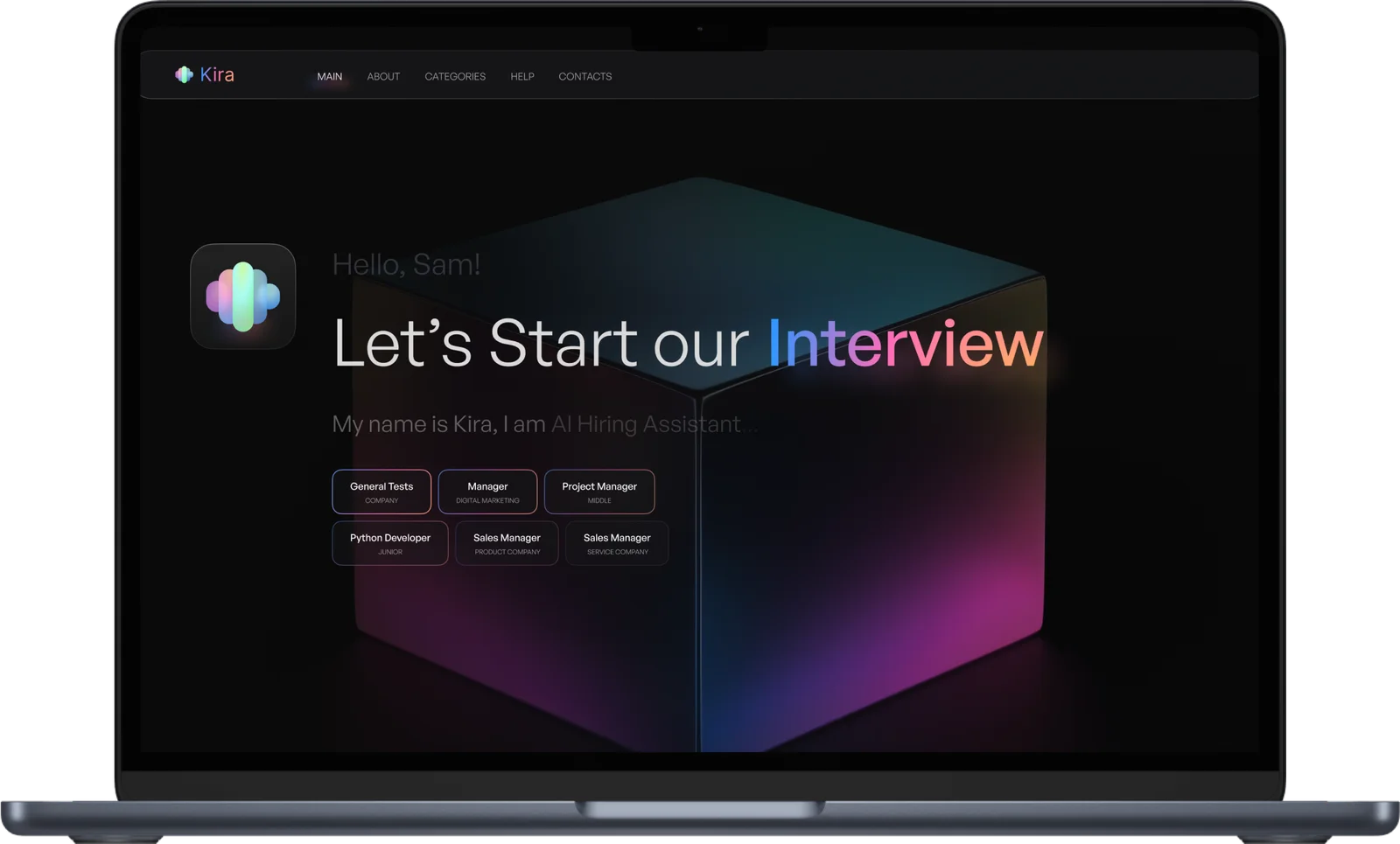
What teams are usually comparing here
The decision is often less about whether async interviewing works and more about how much help the recruiting team wants once candidate responses start coming in.
Kira is usually the better fit when...
- you want stronger screening structure after the async interview is complete
- recruiters need summaries and clearer candidate context, not just another queue of recordings to work through
- the team wants one workflow that connects voice screening with AI-led first-pass review
A simpler interview-only setup may still fit when...
- your team is already happy with its downstream review process and just needs a straightforward async interview touchpoint
- candidate evaluation is handled manually elsewhere and that is not causing friction today
- you are optimizing for the simplest possible step one rather than a more opinionated screening workflow
What to evaluate when comparing Spark Hire alternatives
If both options support asynchronous interviews, the real difference usually comes from how quickly recruiters can turn completed interviews into decisions.
Interview collection versus interview review
Async interviews only save time if the review workflow is stronger than the process they replaced.
How much candidate context gets surfaced automatically
Teams handling real volume need more than recordings. They need a consistent summary layer that helps them triage fast.
How easy it is to hand findings to a hiring manager
The best tools make the recruiter handoff easier. That means a cleaner format, not more raw material.
Whether the workflow feels progressive or pieced together
A stronger screening stack should feel like one continuous flow from interview to review, not a collection of separate tasks.
Pages that make the comparison more concrete
If you want to know whether Kira is a stronger fit, the best next step is to look at the pages that show how the review model actually works.
Comparison FAQ
Why would a team search for a Spark Hire alternative?+
Often because they already believe in async interviewing and now want a stronger review layer around it, especially when recruiter time is tight.
What is Kira’s strongest advantage in this comparison?+
Kira is strongest when the team wants a more structured screening workflow after the candidate finishes the interview, not just a place to collect responses.
Is Kira only for large hiring teams?+
No. It is useful anywhere repetitive screening work is slowing the team down, whether that team is small and growing or already operating at scale.
If async interviews are already part of your process, strengthen what happens next
Kira helps recruiters turn completed interviews into clearer screening decisions with less manual review work.